Types of Fire Extinguishers Used in Industries of Vadodara | Fire Safety Guide
Admin February 23, 2026 Choosing the Right Fire Extinguishers for Factories in Vadodara Introduction Industrial facilities in Vadodara operate in...
Admin
December 5, 2025
Chemical industries represent one of the most fire-sensitive sectors due to the presence of flammable liquids, reactive substances, vapors, and heat-generating processes. A single ignition source can trigger catastrophic incidents impacting human life, infrastructure, and business continuity.
Implementing robust fire safety measures is therefore essential for regulatory compliance, insurance acceptance, and operational safety.
Certain areas within chemical facilities require heightened fire prevention controls.
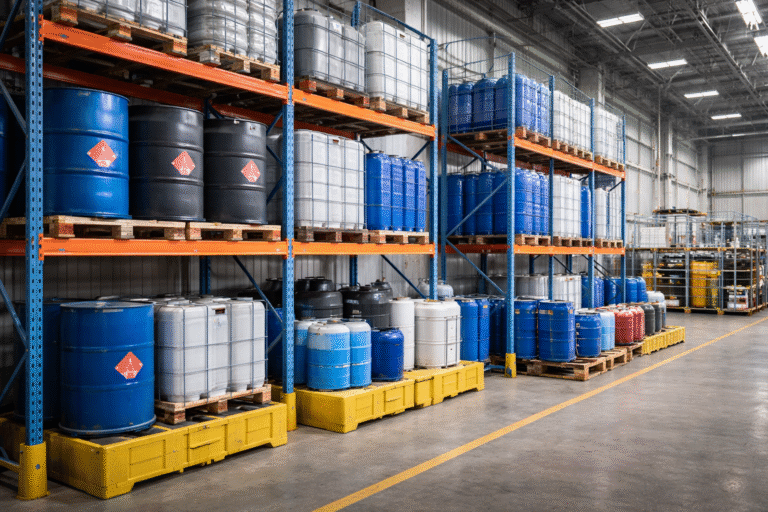
• Chemical Storage Areas
Incorrect segregation or poor ventilation can accelerate fire spread.
• Mixing & Processing Units
Chemical reactions and vapor emissions increase ignition risks.
• Flammable Liquid Handling Zones
Leakage or static discharge can trigger flash fires.
• Loading & Unloading Areas
Material movement introduces mechanical and electrical hazards.
Most chemical industry fires originate from preventable failures.
• Electrical short circuits
• Static electricity buildup
• Improper chemical storage
• Flammable vapor leaks
• Equipment overheating
• Unsafe hot work activities
Chemical plants must deploy multiple layers of fire protection.
• Flameproof & Hazard-Rated Electrical Systems
Prevents spark-related ignition.
• Explosion-Proof Equipment & Devices
Minimizes fire initiation risks.
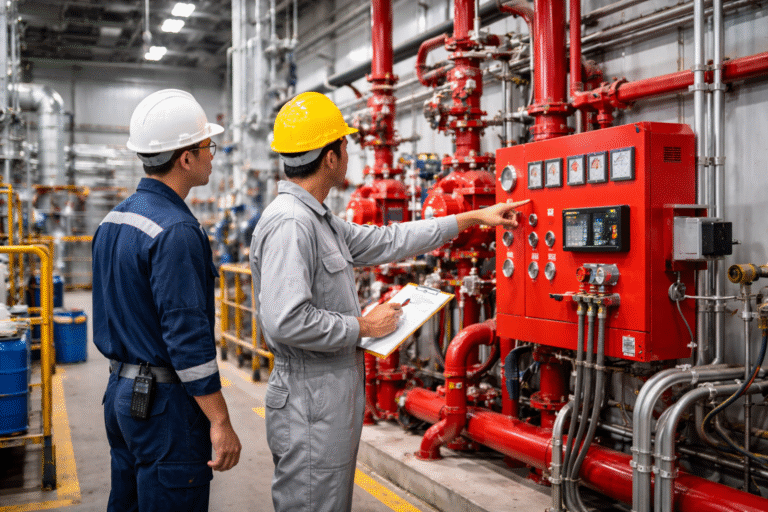
• Automatic Sprinkler & Suppression Systems
Controls fire during early stages.
• Proper Ventilation & Vapor Control
Avoids combustible gas accumulation.
• Static Electricity Grounding Systems
Critical for flammable liquid zones.
• Fire-Resistant Storage & Segregation
Prevents chain-reaction incidents.
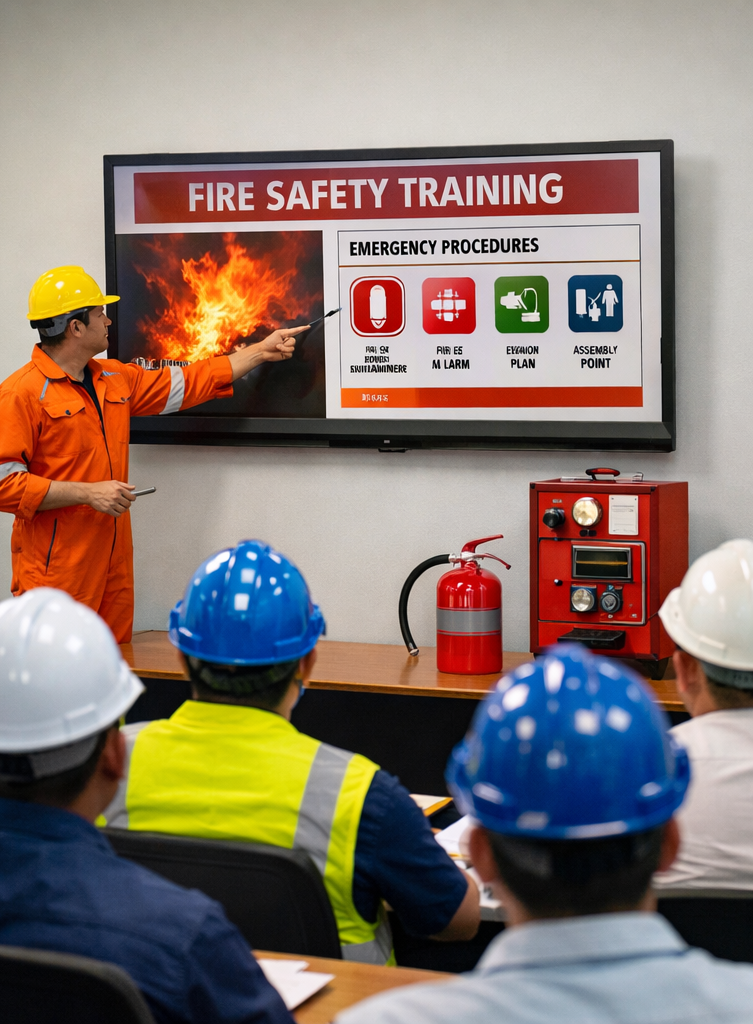
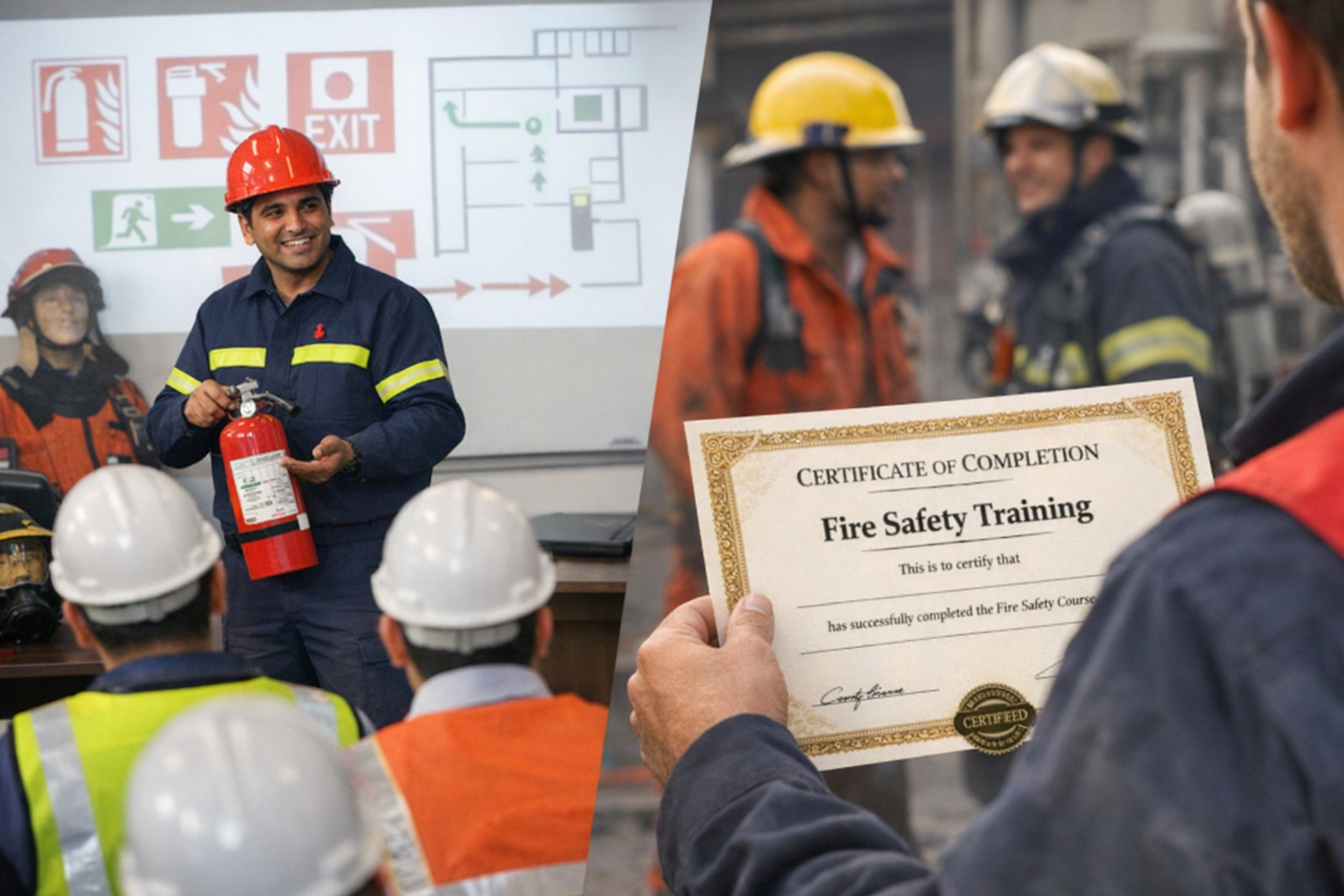
Even advanced fire protection systems fail without trained personnel. Employees must understand:
• Chemical-specific fire hazards
• Emergency response procedures
• Spill control basics
• Safe evacuation practices
• Fire extinguisher usage
Regular mock drills and hazard awareness programs significantly reduce accident severity.
Chemical industries are subject to strict safety scrutiny. Authorities typically evaluate:
• Fire detection and suppression systems
• Electrical safety compliance
• Chemical storage protocols
• Emergency exit accessibility
• Fire documentation & audit reports
Non-compliance may lead to penalties, shutdown notices, or insurance complications.
A professional fire safety audit helps chemical industries:
• Detect hidden ignition risks
• Identify unsafe storage practices
• Improve emergency preparedness
• Strengthen legal compliance
• Reduce financial exposure
Preventive audits are far more cost-effective than post-incident recovery.
Fire safety in chemical industries is not a one-time activity but an ongoing safety discipline involving engineering controls, procedural safeguards, and human preparedness. Proactive compliance and regular safety evaluations protect both workforce and assets.
Disclaimer:
This blog post is for informational purposes only and is not a substitute for professional fire safety advice. Always consult with experts for specific safety recommendations and guidance.
We hope you found this information helpful. Stay safe and be prepared!
Admin February 23, 2026 Choosing the Right Fire Extinguishers for Factories in Vadodara Introduction Industrial facilities in Vadodara operate in...
Admin February 20, 2026 Fire Audit vs Fire Drill – Key Differences, Compliance & Safety in India Introduction In many...
Admin February 21, 2026 Why Summer Fire Risk Increases in Factories | Industrial Prevention Guide India Introduction Summer months pose...