Fire Safety During Construction Work | Complete Safety Guide
Fire Safety During Construction Work | Complete Safety Guide NFSI India October 9, 2026 Fire Safety During Construction Work: Risks,...

Vadodara, Gujarat
NFSI India
September 28, 2026
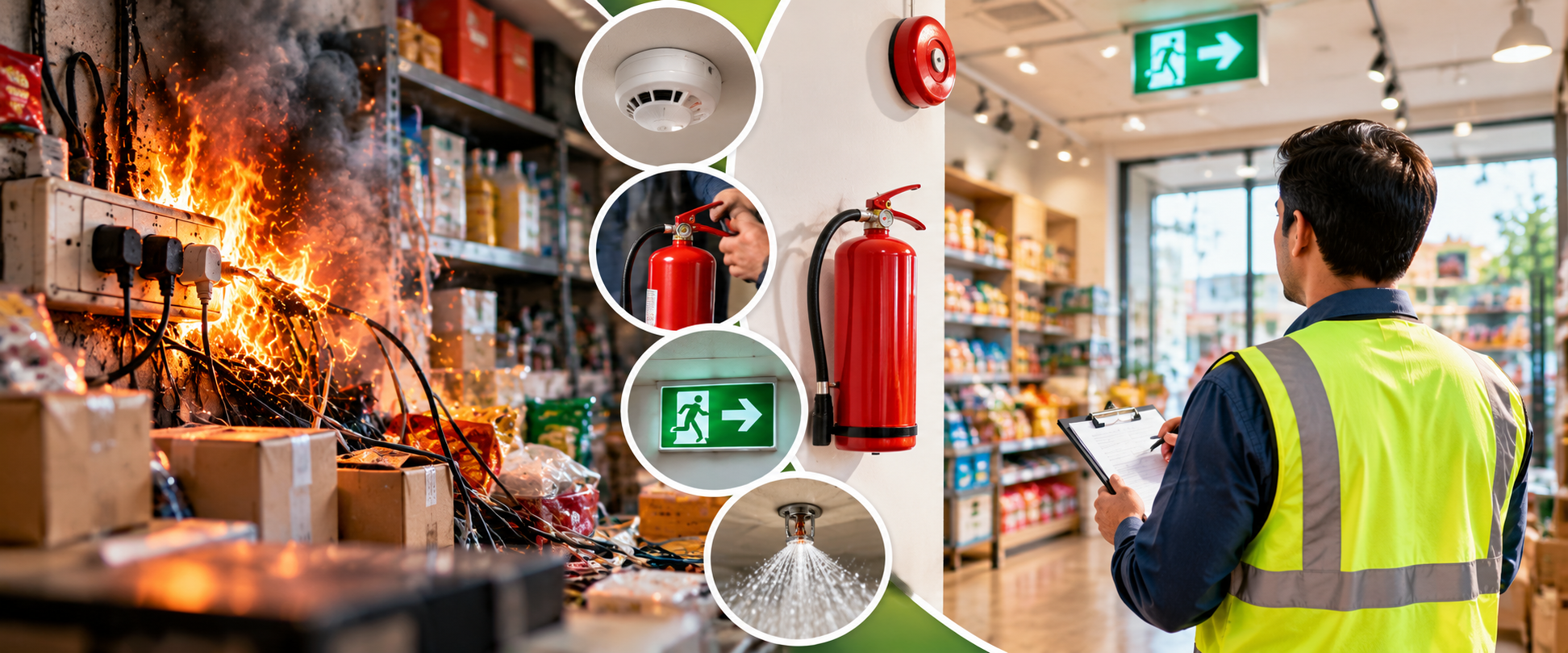
Learn essential fire safety measures for shops and small businesses, including fire prevention, extinguisher selection, electrical safety, emergency exits, staff training, and evacuation planning.
For a small shop or business, fire safety may not always be the first priority.
Business owners are often focused on customers, employees, inventory, sales, and daily operations.
But even a small fire can cause serious injuries, destroy valuable stock, damage equipment, interrupt business operations, and create major financial losses.
A short circuit, overloaded electrical socket, cooking equipment, combustible packaging, flammable materials, or even poor housekeeping can become the starting point of a fire.
The good news is that many shop fires can be prevented—or their impact can be significantly reduced—through basic fire safety measures.
This guide explains fire safety for shops and small businesses, including common fire hazards, prevention measures, fire extinguishers, emergency exits, employee training, evacuation planning, and practical fire safety checks.
Small businesses can face unique fire safety challenges.
A typical shop may contain:
When combustible materials are stored close to electrical equipment or heat sources, a small ignition can quickly develop into a serious fire.
Fire can result in:
Therefore, fire safety should be treated as part of everyday business operations—not just an emergency requirement.
Understanding the hazards is the first step toward prevention.
Electrical fires are a major concern in many commercial premises.
Problems can occur when multiple high-power appliances are connected to one socket or circuit.
Examples include:
● Multiple extension boards
● Overloaded sockets
● Damaged electrical cables
● Loose connections
● Improper electrical modifications
● Poor-quality electrical accessories
Prevention
● Avoid overloading sockets.
● Replace damaged cables and plugs.
● Use properly rated electrical equipment.
● Keep electrical panels accessible.
● Have electrical systems inspected by competent professionals.
● Do not use temporary electrical arrangements as permanent installations.
Fire needs fuel.
Cardboard boxes, paper, packaging, plastic materials, waste and other combustibles can help a fire spread quickly.
Avoid storing combustible materials:
● Near electrical panels
● Near heaters
● Near cooking equipment
● In escape routes
● Around electrical equipment
● In stairways or passages
Maintain clean and organized storage areas and remove unnecessary combustible waste regularly.
Shops frequently use equipment continuously throughout the day.
Examples include:
● Computers
● POS machines
● Refrigerators
● Freezers
● Printers
● Air conditioners
● Fans
● Lighting
● Chargers
● Display equipment
Faulty equipment can overheat and potentially become an ignition source.
Good Practice
Before using equipment, check for:
● Damaged cables
● Burning smell
● Unusual heating
● Sparks
● Flickering
● Repeated tripping
● Unusual sounds
If equipment appears unsafe, stop using it and have it checked by a competent person.
Having a fire extinguisher is not enough.
The extinguisher should be appropriate for the foreseeable fire hazards, properly maintained, accessible and supported by suitable employee training.
Different types of fires require different extinguishing agents.
For example:
● Ordinary combustibles: paper, cardboard, wood and similar materials
● Flammable liquids: fuels, solvents, paints and certain chemicals
● Electrical equipment: energized electrical equipment requires suitable firefighting equipment and safe response procedures
● Cooking oils and fats: commercial kitchens may require specialized extinguishing systems or agents
The correct extinguisher selection should be based on the hazards present at the specific premises.
Important
Employees should not be expected to fight every fire.
If a fire is growing, smoke is heavy, escape is threatened, or the person is not trained, the priority should be to raise the alarm, evacuate, and contact emergency services.
An emergency exit is useful only if people can actually reach it.
Never use escape routes for permanent storage.
Keep:
● Exit doors accessible
● Passageways clear
● Stairways unobstructed
● Emergency routes properly identified
● Exit signs visible
● Doors and access routes maintained
Do not allow cartons, merchandise, furniture or equipment to block emergency pathways.
Early detection can make a major difference.
Depending on the size, layout and risk profile of the premises, suitable systems may include:
● Smoke detectors
● Heat detectors
● Manual call points
● Fire alarm systems
● Audible alarms
● Visual alarm indicators where required
These systems should be appropriately designed, maintained and periodically tested.
Employees should also know what the alarm sounds like and what action they must take when it activates.
A fire extinguisher cannot protect a business if nobody knows how to respond safely.
Employees should understand:
● Common fire hazards
● Fire prevention practices
● What to do when a fire is discovered
● How to raise the alarm
● Emergency exit routes
● Assembly point
● Basic extinguisher awareness
● When not to attempt firefighting
● How to assist customers during evacuation
Training should be practical and relevant to the actual workplace.
Every shop or small business should have a clear emergency evacuation procedure.
The plan should identify:
How to Raise the Alarm
Employees should know how to report a fire immediately.
Primary Escape Route
Identify the safest main route out of the premises.
Alternative Escape Route
Where possible, provide an alternative route in case the primary route is blocked.
Assembly Point
Employees should know where to gather after evacuation.
Emergency Contacts
Keep appropriate emergency contact information readily available.
Accountability
Someone should be responsible for determining whether employees and other known occupants have safely evacuated, without putting anyone at additional risk.
Shop employees are not the only people who may be present during an emergency.
Customers may:
● Be unfamiliar with the building
● Not know the emergency exits
● Panic during an emergency
● Require assistance
● Include children, elderly people or people with disabilities
Employees should therefore be trained to provide clear instructions and direct customers toward safe exits.
Never create additional risk by delaying evacuation simply to protect stock or property.
Storage practices have a major impact on fire risk.
Avoid:
● Excessive accumulation of packaging
● Blocking electrical panels
● Storing materials close to heat sources
● Blocking emergency exits
● Uncontrolled storage of flammable materials
● Mixing incompatible chemicals
Maintain sufficient clearance around equipment and keep storage areas organized.
Food-related businesses have additional hazards.
Potential sources include:
Additional controls may include:
Employees should be trained in the correct emergency response for the equipment and hazards present.
Many businesses now use rechargeable batteries and battery-powered equipment.
Examples include:
● Smartphones
● Laptops
● Power banks
● E-bikes
● Portable equipment
● Battery-operated tools
Damaged or improperly handled batteries can present fire hazards.
Good Practices
● Use compatible chargers.
● Avoid damaged batteries.
● Do not use visibly swollen or damaged batteries.
● Keep charging areas organized.
● Avoid covering chargers or ventilation openings.
● Follow manufacturer instructions.
● Keep combustible materials away from charging areas.
For businesses handling large quantities of lithium-ion batteries, additional risk assessment and specialized controls may be necessary.
A simple housekeeping routine can significantly reduce fire risk.
Every day, check:
☑ Waste and packaging are removed
☑ Escape routes are clear
☑ Electrical equipment is in good condition
☑ No suspicious overheating or burning smell is present
☑ Fire extinguishers are accessible
☑ Storage is organized
☑ Combustible materials are kept away from ignition sources
Good housekeeping is one of the simplest fire prevention measures available to a small business.
Business owners should not wait until an incident occurs to identify hazards.
Regular inspections can help identify:
● Electrical hazards
● Blocked exits
● Poor storage
● Missing signage
● Expired or improperly maintained extinguishers
● Fire alarm issues
● Emergency lighting problems
● Unsafe cooking equipment
● Accumulated combustible waste
A structured fire safety checklist can make these inspections easier and more consistent.
One common mistake is thinking:
“We have extinguishers, so our business is fire-safe.”
Fire extinguishers are only one part of a broader fire safety system.
Effective fire safety combines:
If one part is neglected, the overall level of protection can be reduced.
Use this quick checklist as a starting point:
Electrical Safety
☐ No overloaded sockets
☐ No damaged electrical cables
☐ Electrical panels accessible
☐ Appliances maintained
☐ Electrical faults reported immediately
Fire Protection
☐ Appropriate extinguishers available
☐ Extinguishers accessible
☐ Fire equipment maintained
☐ Fire alarm/detection systems maintained where installed
Emergency Evacuation
☐ Emergency exits accessible
☐ Escape routes clear
☐ Exit signs visible
☐ Emergency lighting maintained where required
☐ Assembly point identified
Housekeeping
☐ Waste removed regularly
☐ Cardboard and packaging controlled
☐ Combustible materials stored safely
☐ Storage does not block exits or equipment
Employee Preparedness
☐ Employees know emergency procedures
☐ Staff know how to raise the alarm
☐ Evacuation routes are understood
☐ Fire safety training provided
☐ Mock drills conducted where appropriate
Fire safety training does not need to be complicated.
Employees should be able to answer basic questions:
Practical training helps employees respond more confidently instead of losing valuable time during an emergency.
For small businesses, even a short, focused fire safety training session can help build better emergency awareness.
A Fire Safety Audit provides a more systematic evaluation of fire risks and existing controls.
Depending on the premises, an audit may examine:
A professional audit can help identify gaps that may not be obvious during routine daily operations.
At National Fire Safety Institute (NFSI), fire safety can be approached as a practical workplace responsibility rather than simply a compliance exercise.
Professional fire safety services can help organizations strengthen their preparedness through:
The objective is simple:
For shops and small businesses, a practical fire safety program can help protect employees, customers, property, inventory and business continuity.
If a fire is discovered:
Alert people in the premises immediately.
Report the fire and provide accurate information about the location.
Leave through the safest available exit.
Do not return inside for money, stock, documents or personal belongings.
Only a trained person should consider attempting initial firefighting when the fire is small, the correct equipment is available, and a safe escape route remains available.
Remain at the designated safe location and follow emergency instructions.
Fire safety for shops and small businesses does not have to be complicated.
The most important step is to recognize that fire prevention and emergency preparedness are part of responsible business management.
Start with the basics:
A few minutes spent identifying a hazard today could prevent a much larger emergency tomorrow.
Fire safety is not only about protecting property—it is about protecting people.
Yes. Small shops can contain electrical equipment, combustible stock, packaging materials and other potential fire hazards. A basic fire prevention and emergency response plan can significantly improve safety.
There is no single extinguisher that is ideal for every shop. The selection should be based on the specific fire hazards present, such as ordinary combustibles, flammable liquids, electrical equipment or cooking oils.
Routine visual checks should be conducted regularly, while formal inspection, testing and maintenance should follow applicable requirements and the manufacturer’s recommendations. The frequency should also reflect the level of risk.
Yes. Employees should understand fire prevention, alarm procedures, evacuation routes, assembly arrangements and the safe use of firefighting equipment where appropriate.
Only when they are trained, the fire is small and manageable, the correct extinguisher is available, and they have a clear escape route. Evacuation should take priority whenever conditions are unsafe.
Blocked exits can delay evacuation and increase the risk of injury during a fire. Escape routes should remain accessible at all times.
Yes. A fire safety audit can identify hazards and gaps involving electrical safety, fire protection equipment, emergency exits, housekeeping, evacuation planning and employee preparedness.
Disclaimer:
This blog post is for informational purposes only and is not a substitute for professional fire safety advice. Always consult with experts for specific safety recommendations and guidance.
We hope you found this information helpful. Stay safe and be prepared!
Fire Safety During Construction Work | Complete Safety Guide NFSI India October 9, 2026 Fire Safety During Construction Work: Risks,...
Fire Safety for Shops & Small Businesses | Complete Guide NFSI India September 28, 2026 Fire Safety for Shops &...
Solar Panel Fire Safety: Risks, Prevention & What Every Building Owner Should Know NFSI India October 6, 2026 Solar Panel...