Fire Safety During Construction Work | Complete Safety Guide
Fire Safety During Construction Work | Complete Safety Guide NFSI India October 9, 2026 Fire Safety During Construction Work: Risks,...

Vadodara, Gujarat
NFSI India
October 9, 2026
Learn essential fire safety measures during construction work, including hot work, electrical hazards, flammable materials, temporary systems, fire prevention, emergency planning, and worker training.
Construction sites are constantly changing environments.
Buildings are being constructed, demolished, modified and fitted out while workers, contractors, machinery, electrical systems, temporary installations and construction materials operate in the same area.
These conditions can create significant fire risks.
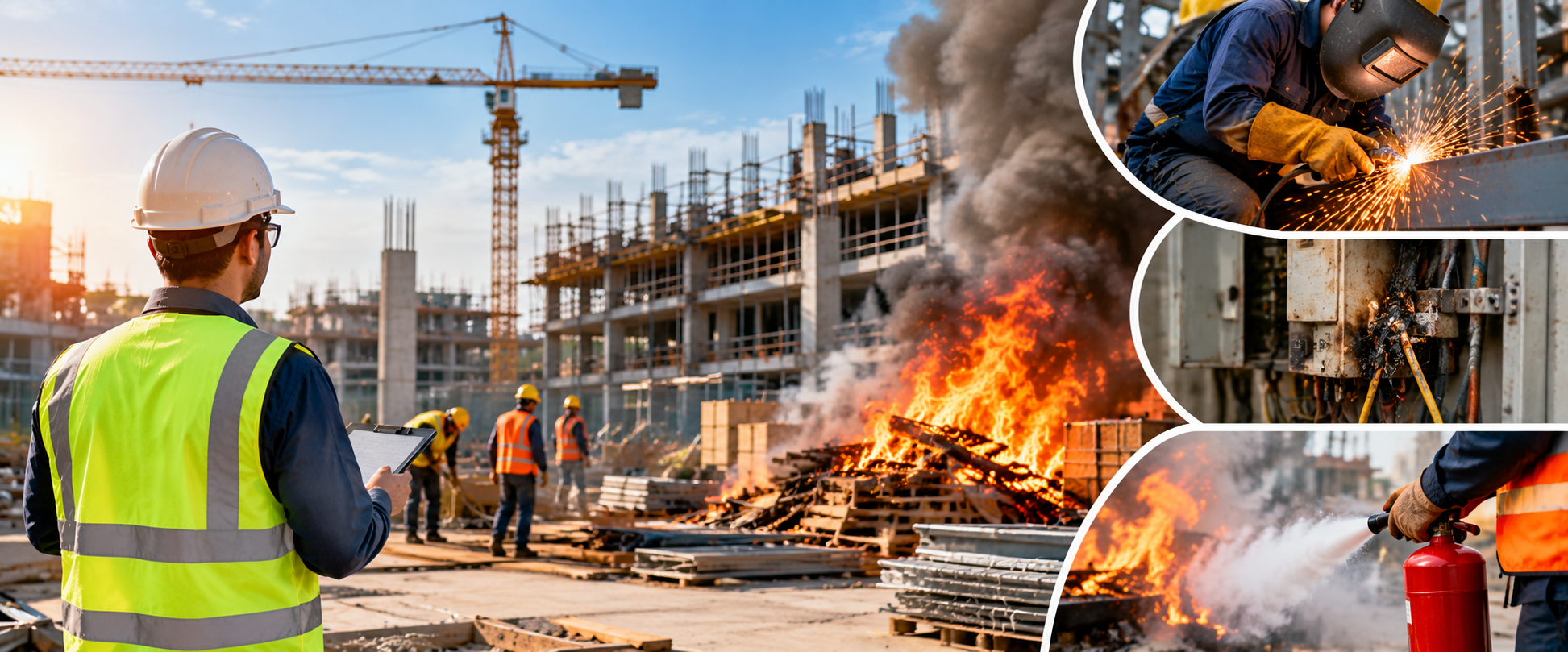
Activities such as welding, cutting, grinding, electrical work and the use of flammable materials can introduce ignition sources. At the same time, materials such as wood, insulation, packaging, plastics, paints and solvents can provide fuel for a fire.
A construction-site fire can spread rapidly and may result in:
That is why fire safety during construction work must be planned from the beginning of the project—not addressed only after the building is completed.
A completed building usually has permanent fire protection systems.
A construction site may not.
During construction:
This means the level of fire protection can change from one stage of the project to another.
Therefore, construction-site fire safety should be treated as a dynamic risk-management process.
Understanding the major hazards is the first step toward controlling them.
Hot work is one of the most important construction-site fire hazards.
It includes activities such as:
● Welding
● Gas cutting
● Brazing
● Soldering
● Grinding
● Torch-applied work
● Other activities that generate flame, sparks or significant heat
Sparks and hot particles can travel beyond the immediate work area and ignite combustible materials.
Before starting hot work:
● Inspect the work area.
● Remove or protect combustible materials.
● Check nearby openings and concealed spaces.
● Ensure suitable firefighting equipment is available.
● Establish appropriate hot-work controls or permits where required.
● Assign trained personnel.
● Check the area after work is completed.
The area should also be monitored after hot work where necessary because smouldering materials can ignite later.
Construction sites frequently rely on temporary electrical installations.
● Damaged cables
● Improper connections
● Overloaded circuits
● Poor-quality extension leads
● Exposed conductors
● Improper grounding
● Temporary wiring installed incorrectly
● Electrical equipment exposed to unsuitable conditions
● Use properly rated electrical equipment.
● Protect cables from physical damage.
● Keep electrical installations organized.
● Avoid overloading circuits.
● Inspect temporary electrical systems regularly.
● Ensure installation and maintenance are carried out by competent personnel.
● Remove damaged equipment from service.
Temporary does not mean less important.
Temporary electrical systems require the same level of attention to safety as permanent systems.
Construction sites can contain large quantities of combustible materials.
● Timber
● Cardboard
● Packaging
● Plastic sheets
● Insulation materials
● Foam products
● Paper
● Waste materials
When these materials are poorly stored, they can provide fuel for a rapidly developing fire.
● Keep storage areas organized.
● Remove unnecessary packaging regularly.
● Separate combustible materials from ignition sources.
● Avoid unnecessary accumulation of waste.
● Keep access to fire protection equipment clear.
● Follow site-specific storage requirements.
● Paints
● Thinners
● Solvents
● Adhesives
● Fuels
● Cleaning chemicals
● Gas cylinders
● Other flammable substances
Improper storage or handling can increase the risk of fire.
● Store flammable materials in appropriate designated areas.
● Keep containers properly closed.
● Keep materials away from ignition sources.
● Follow manufacturer instructions and safety data sheets.
● Prevent incompatible materials from being stored together.
● Control quantities kept at the work location.
Only bring the amount reasonably required for the work into active areas.
Gas cylinders can present serious fire and explosion hazards if they are damaged, improperly stored or incorrectly handled.
● Welding
● Cutting
● Heating
● Other specialized operations
● Store cylinders in designated areas.
● Keep them away from ignition sources where appropriate.
● Secure cylinders against falling.
● Protect them from physical damage.
● Use suitable regulators, hoses and connections.
● Inspect equipment before use.
● Keep oxygen cylinders separated from incompatible combustible or fuel-gas arrangements as required by applicable procedures.
● Close valves when equipment is not in use.
Workers should be trained in the safe handling of gas cylinders.
Cold-weather construction may require temporary heaters.
● Wood
● Packaging
● Insulation
● Plastic materials
● Curtains or coverings
● Other combustibles
● Use suitable equipment.
● Follow manufacturer instructions.
● Maintain required clearances.
● Keep combustible materials away from heaters.
● Do not modify heating equipment.
● Inspect equipment regularly.
Discarded cigarettes can ignite combustible materials.
Construction sites may contain dry wood, packaging, insulation, solvents and other combustible materials.
A clearly defined smoking policy should be established.
Where smoking is permitted, designated areas should be located away from combustible materials and appropriately managed.
Poor housekeeping is a major contributor to fire risk.
Waste can accumulate quickly during construction.
● Cardboard
● Plastic wrapping
● Wood offcuts
● Sawdust
● Packaging
● Oily rags
● Chemical containers
A good housekeeping program should include:
Collect → Remove → Store safely → Dispose appropriately
Do not allow waste to accumulate around work areas, electrical equipment or escape routes.
One of the biggest challenges on construction sites is that escape routes can change frequently.
Walls, scaffolding, temporary partitions, equipment and stored materials can alter access.
Therefore:
● Clearly identify current escape routes.
● Keep pathways unobstructed.
● Communicate route changes to workers.
● Provide suitable emergency signage.
● Ensure workers know alternative routes where necessary.
An evacuation plan that was correct last month may not be correct today.
Permanent fire detection systems may not yet be operational during early construction phases.
Temporary fire detection and alarm arrangements may therefore be required based on the site’s risk assessment and applicable requirements.
● How to raise the alarm
● What the alarm means
● Where to evacuate
● Where the assembly point is located
● Who is responsible for emergency coordination
Suitable firefighting equipment should be available based on the hazards present.
The site may require different types of firefighting equipment depending on activities such as:
Fire extinguishers should be:
Workers should never be expected to fight a fire that is beyond their training or ability.
If the fire is spreading rapidly, producing heavy smoke, threatening an escape route, or creating an unsafe environment:
A hot-work permit system can provide a structured way to control high-risk activities.
Before hot work begins, the responsible person should consider:
Is the area suitable for hot work?
Have combustible materials been removed or adequately protected?
Could sparks or heat reach another room, floor or concealed space?
Is suitable firefighting equipment immediately available?
Are workers competent and aware of the controls?
Does the area require monitoring after the work is completed?
A permit system should support risk control—it should not become a paperwork exercise.
Construction workers should receive fire safety training appropriate to their roles and site hazards.
Training can cover:
Contractors and subcontractors should also be included in site fire safety communication.
Construction projects often involve multiple contractors.
One contractor’s work can create hazards for another contractor.
For example:
Therefore, site management should establish clear coordination procedures.
Before work begins, contractors should understand:
Everyone working on the site should follow the same basic fire safety system.
A construction-site emergency plan should be practical and regularly updated.
It should address:
How will workers know there is a fire?
Who raises the alarm and who contacts emergency services?
Where are the safest routes out?
Where should workers gather?
How will site management identify people who may still be inside?
Can emergency vehicles and responders reach the site?
Are there gas cylinders, chemicals, fuel storage or other high-risk areas?
Emergency vehicles need reliable access.
Do not block access routes with:
Site layouts should consider emergency access throughout the project.
Because construction sites change continuously, fire risks should be reviewed regularly.
A fire risk assessment should consider:
Hazards → People at Risk → Existing Controls → Gaps → Additional Controls → Review
Reassess when there are significant changes such as:
Use this checklist as a practical starting point.
Fire risks can change as the project progresses.
Focus on:
Focus on:
Fire risks may increase because of:
Focus on:
The fire safety plan should evolve with the project.
Workers should follow the site’s emergency procedure.
A basic response is:
Alert people nearby and activate the site's alarm system if available.
Contact the appropriate emergency service and site emergency coordinator.
Use the designated safe route.
Never return to collect tools, equipment or personal belongings.
Only trained personnel should consider using an extinguisher when the fire is small, the correct equipment is available and a safe escape route remains available.
Remain there and follow instructions from the emergency response team.
Fire safety training helps workers recognize hazards before they become emergencies.
A trained worker is more likely to notice:
Fire safety is therefore not only an emergency-response activity.
It starts with recognizing and controlling hazards before ignition occurs.
A professional fire safety audit can help construction companies identify weaknesses in their existing fire safety arrangements.
An audit may review:
Because site conditions change frequently, audits and inspections should be integrated into the overall project safety program.
National Fire Safety Institute (NFSI) can support organizations with practical fire safety education and preparedness programs.
Relevant services include:
For construction projects, the objective is to help teams understand the hazards associated with their work and prepare for safe emergency response.
Construction sites are temporary workplaces, but the fire risks they create can have permanent consequences.
Welding sparks, electrical faults, flammable materials, gas cylinders, poor housekeeping and changing escape routes can all contribute to a serious fire.
The most effective approach is proactive:
Fire safety should not be treated as an additional task at the end of a construction project.
Construction sites contain multiple ignition sources, combustible materials, temporary electrical systems and changing layouts. These conditions can increase the likelihood and potential severity of fires.
There is no single hazard that applies to every project. Hot work, temporary electrical systems, flammable materials, gas cylinders and poor housekeeping are common significant hazards.
Hot work refers to activities that generate flame, sparks or significant heat, such as welding, cutting, brazing, soldering and certain grinding operations.
A hot-work permit is a control process used by many organizations to authorize and manage activities that create ignition sources. It helps ensure that appropriate precautions are in place before, during and after the work.
Yes. Workers should receive training appropriate to their roles, site hazards and emergency procedures, including alarm raising, evacuation and basic fire prevention.
Fire risks should be reviewed regularly and whenever significant changes occur in activities, materials, equipment, contractors or site layout.
Responsibility depends on the project’s management structure and applicable requirements. Site management, contractors, supervisors and workers all have important roles in maintaining safe working conditions.
Suitable firefighting equipment should be provided according to the hazards and risk assessment. Equipment must be accessible, maintained and appropriate for the types of fire that could reasonably occur.
Disclaimer:
This blog post is for informational purposes only and is not a substitute for professional fire safety advice. Always consult with experts for specific safety recommendations and guidance.
We hope you found this information helpful. Stay safe and be prepared!
Fire Safety During Construction Work | Complete Safety Guide NFSI India October 9, 2026 Fire Safety During Construction Work: Risks,...
Fire Safety for Shops & Small Businesses | Complete Guide NFSI India September 28, 2026 Fire Safety for Shops &...
Solar Panel Fire Safety: Risks, Prevention & What Every Building Owner Should Know NFSI India October 6, 2026 Solar Panel...