Fire Safety Training in Gujarat | Industrial Fire Safety Guide
Fire Safety Training in Gujarat | Industrial Fire Safety Guide NFSI India October 17, 2026 Why Fire Safety Training Is...

Vadodara, Gujarat
NFSI India
October 17, 2026
Learn how fire doors protect lives during a fire.
Understand fire door types, placement, inspection, maintenance, common mistakes, and workplace fire safety practices.
Gujarat has a diverse industrial and commercial environment that includes manufacturing units, engineering companies, chemical and pharmaceutical facilities, warehouses, processing plants, offices, commercial buildings and many other workplaces.
With industrial operations come different types of fire hazards. Electrical equipment, machinery, flammable materials, combustible packaging, chemicals, hot work, storage areas and human error can all contribute to fire risk.
While fire extinguishers, alarms, hydrants and other fire protection systems are essential, equipment alone cannot guarantee workplace safety.
Employees must know how to identify hazards, prevent unsafe situations, raise an alarm, respond appropriately and evacuate safely during an emergency. This is why fire safety training in Gujarat is an important part of workplace safety and emergency preparedness.
For industries in Vadodara, Ahmedabad, Bharuch, Ankleshwar, Surat, Vapi, Rajkot and other industrial areas of Gujarat, practical fire safety training can help organizations build a more prepared and safety-conscious workforce.
Industrial fires can develop rapidly. A small ignition source can become a serious emergency
when combustible materials, machinery, chemicals or electrical systems are involved.
The first few moments of an emergency are extremely important.
Employees who have received appropriate fire safety training are more likely to understand:
Training therefore becomes an important layer of protection between a workplace hazard and a potentially serious incident.
Different industries have different fire hazards. A chemical manufacturing facility may face different risks from a warehouse, engineering plant or office.
Some common workplace fire hazards include:
Electrical panels, wiring, motors, machinery and overloaded circuits can become sources of heat or ignition when they are damaged, improperly maintained or incorrectly used.
Electrical safety should therefore be an important component of workplace fire prevention.
Industries may handle or store materials that can burn quickly.
Examples can include:
● Solvents
● Oils
● Fuels
● Chemicals
● Plastics
● Packaging materials
● Paper and cardboard
● Certain industrial gases
Proper storage, handling and housekeeping can significantly reduce unnecessary fire risk.
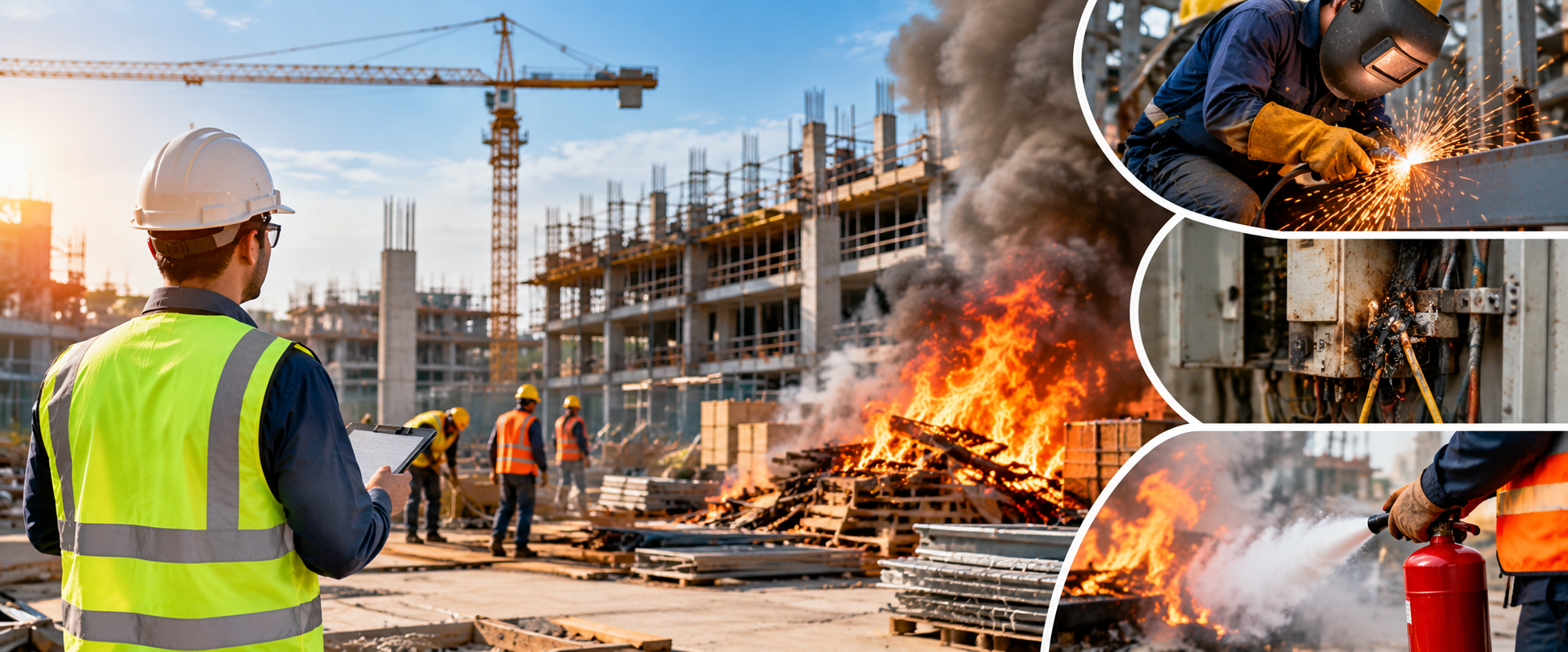
Welding, cutting, grinding and other hot-work activities can produce sparks, flames or high temperatures.
Without appropriate controls, these activities can ignite nearby combustible materials.
Employees involved in hot work should understand the applicable workplace procedures, including controls around the work area and post-work fire watch where required.
Industrial machinery may generate heat, friction or electrical energy.
Poor maintenance, overheating, lubrication problems or electrical faults can contribute to fire risk.
Accumulated waste, oil residues, packaging material and combustible materials can increase the severity and spread of a fire.
Good housekeeping is therefore not simply about keeping a workplace clean—it is also part of fire prevention.
Vadodara is home to a wide range of industrial, engineering, manufacturing, chemical, pharmaceutical and commercial activities.
This means workplaces may have different fire hazards depending on their operations.
Organizations in and around Vadodara need employees who understand the fire risks associated with their specific workplace.
Fire safety training in Vadodara can help businesses build awareness around:
Training should ideally be practical and relevant to the actual workplace rather than being limited to classroom theory.
One common misconception is that fire safety training is only necessary for fire officers, safety officers or security personnel.
In reality, employees at different levels can have important roles in emergency preparedness.
Depending on the organization’s emergency plan, training may be useful for:
The level and type of training should be appropriate to the employee’s responsibilities and workplace risks.
An effective industrial fire safety training program should cover both prevention and emergency response.
Employees should understand the basic principles of fire, including the conditions required for combustion and how removing one of those conditions can help prevent or control a fire.
This provides the foundation for understanding fire prevention.
Employees should learn how to recognize hazards in their own working environment.
Examples include:
● Damaged electrical cables
● Unsafe electrical connections
● Blocked exits
● Improper chemical storage
● Combustible waste
● Unsafe hot work
● Smoking in prohibited areas
● Poor housekeeping
● Improper storage practices
Employees should understand that extinguishers are selected according to the type of fire and the extinguishers rating.
Training can cover:
● Common extinguisher types
● Basic operating principles
● Fire classification
● Appropriate extinguisher selection
● Extinguisher limitations
● Safe approach and withdrawal
● When not to attempt firefighting
Only trained and authorized personnel should attempt to use a fire extinguisher when conditions are appropriate. If the fire is growing, producing heavy smoke, blocking escape, or otherwise becoming unsafe, evacuation and emergency response should take priority.
Employees should know:
● Primary evacuation routes
● Alternative exits
● Assembly points
● Alarm procedures
● Emergency communication procedures
● Areas to avoidCommentHighlight
● How to report missing persons according to the emergency plan
Mock drills provide an opportunity to test whether employees understand the emergency procedure.
A drill can help organizations identify issues such as:
● Confusion about evacuation routes
● Blocked exits
● Poor communication
● Delayed evacuation
● Unclear responsibilities
● Inadequate assembly-point management
After a drill, organizations should review the results and improve their emergency procedures where necessary.
Different industries require different approaches to fire safety.
Chemical facilities can involve flammable liquids, gases, reactive substances and other specialized hazards.
Training should be aligned with the organization’s specific chemicals, processes, emergency procedures and safety systems.
Key areas may include:
● Chemical fire hazards
● Safe storage and handling
● Emergency response
● Spill-related fire risks
● Evacuation
● Firefighting equipment awareness
Pharmaceutical facilities may have production equipment, electrical systems, solvents, packaging materials and controlled processes.
Fire safety training can help employees understand:
● Workplace fire hazards
● Emergency procedures
● Fire prevention
● Evacuation
● Equipment awareness
● Emergency communication
Manufacturing environments may involve machinery, electrical systems, welding, cutting, oils and combustible materials.
Training should address hazards specific to the production process.
Special attention may be given to:
● Electrical fire prevention
● Hot-work safety
● Machinery-related fire hazards
● Housekeeping
● Emergency evacuation
● Extinguisher awareness
Warehouses can contain significant quantities of packaging, plastics, textiles, chemicals or other combustible materials.
Fire can spread rapidly when storage is poorly organized or emergency access is restricted.
Training should therefore include:
● Safe storage practices
● Fire-load awareness
● Clear emergency routes
● Housekeeping
● Emergency evacuation
● Fire equipment awareness
Even an office can experience a serious fire because of:
● Electrical equipment
● UPS systems
● Batteries
● Kitchen appliances
● Paper and packaging
● Air-conditioning systems
Employees should know what to do if smoke or fire is discovered and how to evacuate safely.
Organizations often invest in:
These systems are extremely important.
However, employees must understand how to respond when these systems activate or when a fire is discovered.
For example, having an emergency exit is not enough if employees do not know where it is.
Having an alarm system is not enough if employees do not understand the alarm procedure.
Having extinguishers is not enough if employees do not know their limitations and the circumstances in which evacuation should take priority.
Fire safety is therefore a combination of systems, procedures, people and preparedness.
Fire safety cannot be treated as the responsibility of employees alone.
Management should support a workplace safety culture by:
Management commitment can make a significant difference in how seriously fire safety is treated across an organization.
A fire emergency can be confusing.
People may panic, run in different directions or make unsafe decisions if they have never practiced an evacuation procedure.
Regular awareness sessions and drills can help employees become familiar with the organization’s emergency arrangements.
Training does not eliminate every risk, but it can help employees respond more calmly and systematically.
A fire can affect much more than the immediate work area.
Depending on the severity of an incident, an organization may face:
Fire prevention and emergency preparedness are therefore also connected to business continuity.
A workplace that identifies hazards early and prepares employees for emergencies is better positioned to reduce the potential impact of an incident.
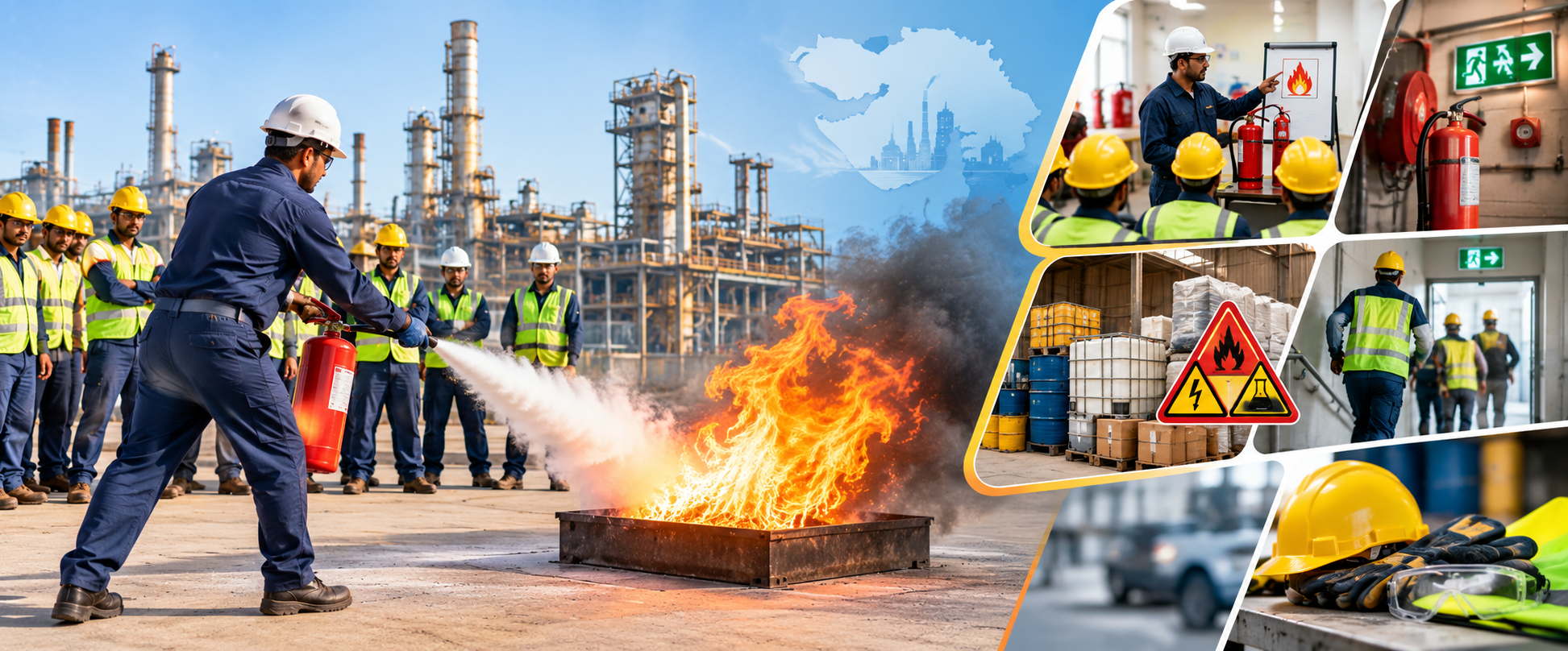
Reading about fire safety is useful, but practical training can make the information easier to understand and apply.
A practical training session may include:
Employees can learn concepts and then see how those concepts apply to their workplace.
For example, instead of simply telling employees where an emergency exit is located, a practical session can help them understand the actual evacuation route and assembly procedure.
National Fire Safety Institute (NFSI) can support organizations that want to improve employee awareness and workplace fire preparedness through structured fire safety training.
Depending on the organization’s requirements, training programs can focus on areas such as:
● Fire prevention awareness
● Workplace fire hazards
● Fire extinguisher awareness and practical demonstrations
● Emergency evacuation
● Mock drills
● Basic emergency response
● Fire safety procedures
● Employee awareness
● Workplace preparedness
● Fire safety audits and risk-focused guidance
Training can be adapted according to the organization’s industry, workplace environment and employee responsibilities.
For organizations looking for fire safety training in Gujarat or Vadodara, a workplace-specific approach can be more useful than a generic training program.
Fire safety training can be valuable for organizations across different sectors, including:
The exact training requirements should be determined based on the workplace’s hazards, activities, building characteristics and applicable requirements.
Fire safety should not be viewed only as a compliance activity or an annual training requirement.
It is an investment in:
A well-trained workforce can recognize hazards earlier, follow emergency procedures more confidently and contribute to a safer workplace.
For industries operating across Gujarat, particularly in industrial and manufacturing environments, developing a strong fire safety culture should be an ongoing process.
Fire emergencies can happen unexpectedly, but workplace preparedness can be developed before an emergency occurs.
For industries in Gujarat, fire safety training is an important part of building a safer and more prepared workforce. From manufacturing and chemical facilities to warehouses, offices and commercial workplaces, employees need to understand the risks present in their environment and the correct emergency procedures.
Fire protection systems provide essential technical protection—but trained people help ensure those systems, procedures and emergency plans are understood and used effectively.
If your organization is looking for fire safety training in Gujarat or Vadodara, choose a program that combines practical knowledge, workplace-specific hazards, emergency preparedness and hands-on learning.
Because fire safety is not only about controlling a fire—it is about preventing emergencies, protecting people and being prepared to respond when it matters most.
Fire safety training helps employees understand workplace fire hazards, prevention practices, emergency procedures, evacuation routes and appropriate response actions. This can improve overall workplace preparedness.
Yes. Small workplaces can also face electrical, combustible-material, machinery, storage and other fire hazards. Training should be appropriate to the size and risk profile of the workplace.
Depending on the workplace, training may include fire prevention, hazard identification, extinguisher awareness, emergency evacuation, emergency communication, mock drills and basic fire response procedures.
Organizations in Vadodara can seek workplace-specific fire safety training based on their operational hazards and training requirements.
Training may be relevant for employees, supervisors, security personnel, maintenance teams, facility staff, managers and designated emergency response personnel, depending on their roles.
There is no single frequency that applies identically to every workplace. Organizations should consider applicable requirements, workplace risk, employee turnover, changes in processes and the results of drills or incidents.
Mock drills allow organizations to practice evacuation and emergency procedures and identify issues such as blocked routes, communication gaps or confusion about responsibilities.
Training cannot eliminate all fire risk, but it can improve awareness, encourage safer practices and help employees identify and report hazards.
Many fire safety programs include extinguisher awareness and practical demonstrations. The training should emphasize selecting appropriate equipment, understanding its limitations and prioritizing evacuation when conditions are unsafe.
Companies can contact a professional fire safety training organization such as NFSI to discuss their workplace, industry, employee requirements and training objectives.
Disclaimer:
This blog post is for informational purposes only and is not a substitute for professional fire safety advice. Always consult with experts for specific safety recommendations and guidance.
We hope you found this information helpful. Stay safe and be prepared!
Fire Safety Training in Gujarat | Industrial Fire Safety Guide NFSI India October 17, 2026 Why Fire Safety Training Is...
Fire Safety During Construction Work | Complete Safety Guide NFSI India October 9, 2026 Fire Safety During Construction Work: Risks,...
Fire Safety for Shops & Small Businesses | Complete Guide NFSI India September 28, 2026 Fire Safety for Shops &...