Fire Safety During Construction Work | Complete Safety Guide
Fire Safety During Construction Work | Complete Safety Guide NFSI India October 9, 2026 Fire Safety During Construction Work: Risks,...

Vadodara, Gujarat
NFSI India
September 18, 2026
Learn about solar panel fire safety, common rooftop solar fire risks, electrical hazards, inverter safety, prevention measures, maintenance, and emergency response.
Solar energy is rapidly becoming an important part of modern energy systems.
Homes, offices, factories, warehouses, schools, hospitals, and commercial buildings are installing rooftop solar photovoltaic (PV) systems to generate electricity and reduce dependence on conventional power sources.
Solar power offers significant benefits, but like every electrical installation, it must be designed, installed, operated, and maintained safely.
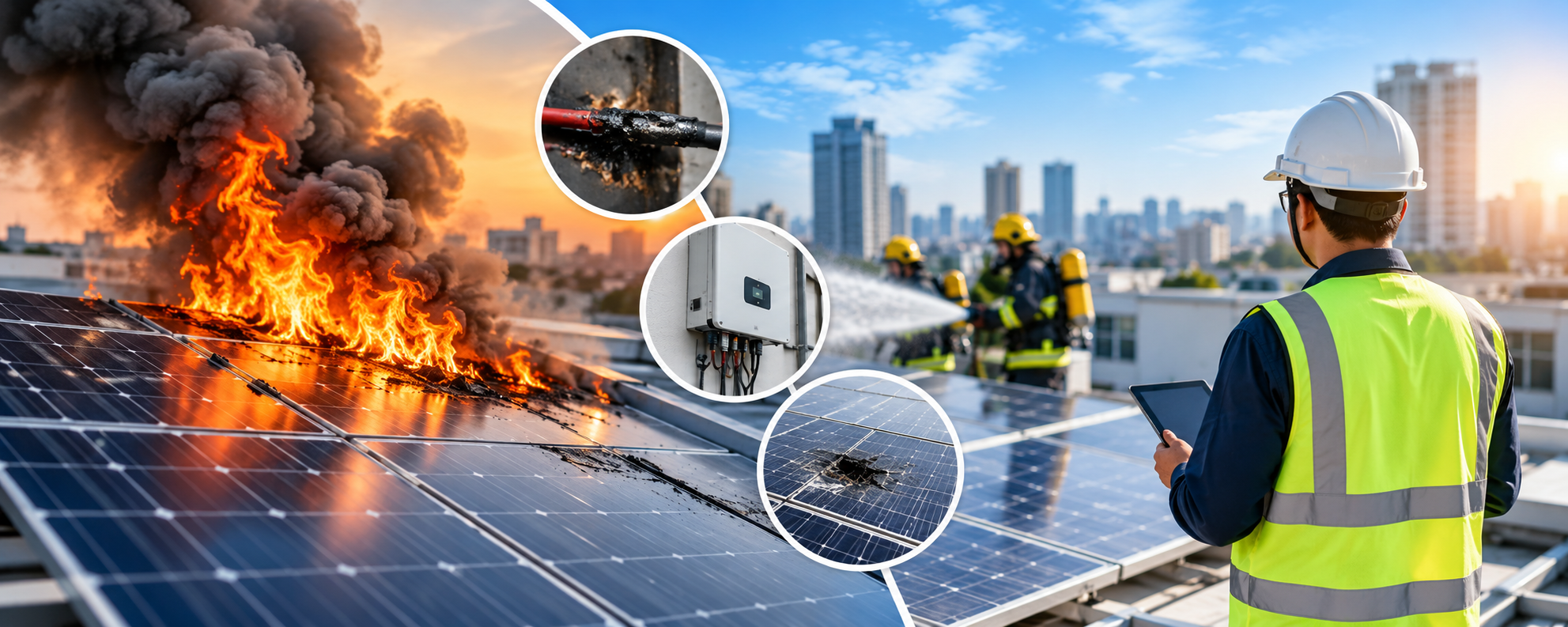
A poorly installed or damaged solar PV system can create electrical hazards, including arc faults, overheating, damaged cables, loose connections, and equipment failure, which may contribute to fire.
One important challenge is that solar PV modules can continue generating electrical energy whenever sufficient light is available. This means a solar installation requires specific isolation and emergency procedures.
This guide explains the major solar panel fire safety risks, how to prevent them, and what building owners, facility managers, employees, and maintenance teams should know.
A rooftop solar system typically consists of:
A fault in any part of the system can create a safety risk.
Common problems include:
Therefore, solar installations should be treated as an integral part of a building’s overall fire and electrical safety plan.
Solar panels themselves are not normally an ignition source simply because they generate electricity. Fire risk generally arises from faults, installation problems, damaged components, poor maintenance, or failures elsewhere in the system.
Some of the most important risk factors include the following.
One of the major hazards associated with PV systems is an electrical arc.
A damaged cable, loose connection, or defective connector can create an arc that generates intense heat.
If combustible material is nearby, this heat can potentially become an ignition source.
Loose connections can increase electrical resistance.
This can result in:
● Localized heating
● Component damage
● Insulation deterioration
● Potential ignition
Connections should therefore be installed and maintained according to the system manufacturer’s requirements and applicable electrical standards.
PV cables may be exposed to:
● Sunlight
● Heat
● Weather
● Mechanical damage
● Rodents
● Sharp edges
Damaged or improperly supported cables can create serious electrical hazards.
Cables should be routed, secured, protected, and inspected appropriately.
Solar PV systems use connectors to join electrical components.
Problems can occur when:
● Connectors are incorrectly installed
● Different incompatible connector types are mixed
● Connections are not fully engaged
● Components are damaged
Using approved, compatible components and following manufacturer installation instructions is essential.
The inverter converts DC electricity generated by the PV array into usable AC electricity.
Inverters generate heat during operation.
Poor ventilation, excessive ambient temperature, equipment faults, or improper installation can increase the risk of overheating.
A solar system should be installed by appropriately qualified personnel.
Poor workmanship can result in:
● Incorrect cable routing
● Inadequate protection
● Poor connections
● Improper grounding/earthing
● Incorrect component selection
● Unsafe isolation arrangements
Professional installation is therefore a critical fire prevention measure.
Solar installations are exposed to rain and weather conditions.
Equipment that is not suitably rated, installed, or maintained can be vulnerable to water ingress.
Water and electricity create serious safety hazards, particularly where electrical enclosures or connections are compromised.
Solar equipment can be damaged by:
● Construction work
● Falling objects
● Severe weather
● Animals
● Improper maintenance activities
Any visible damage should be reported and assessed by a qualified professional.
Building owners and facility managers should maintain a regular inspection program.
Look for:
Look for:
Look for:
Look for:
Do not allow unnecessary combustible materials to accumulate around electrical equipment or access areas.
Rooftop installations create additional considerations.
Maintenance and emergency personnel should have safe access to relevant equipment.
Cables should be properly supported and protected.
PV equipment, isolation points, and electrical hazards should be clearly identified according to the system design and applicable requirements.
The rooftop layout should be considered when developing emergency response procedures.
The inverter is one of the most important electrical components in a PV installation.
To improve inverter safety:
A solar PV system can remain electrically energized while sufficient light is available.
Therefore, emergency responders need to understand that turning off the building’s main electrical supply may not necessarily eliminate all PV DC electrical hazards.
For this reason, solar installations should have appropriate:
Emergency responders should follow their established procedures and avoid contact with damaged electrical components.
If a fire involves a solar PV system:
Immediately alert people in the building.
Follow the established emergency evacuation procedure.
Provide clear information that the building has a solar PV installation.
Do not approach exposed cables, panels, connectors, or electrical equipment.
Only appropriately qualified personnel should inspect or repair the electrical system.
Do not re-enter the area until it has been declared safe.
This is an important safety question.
Do not improvise firefighting methods around energized electrical equipment.
Water can create an electric shock hazard when electrical equipment remains energized.
The appropriate firefighting response depends on the equipment involved, system condition, fire development, and emergency-service procedures.
Employees should not attempt to fight a significant solar PV fire themselves.
Their priority should be:
Some solar installations are combined with battery energy storage systems (BESS).
These may use lithium-ion batteries.
Battery systems introduce additional hazards such as:
If your solar installation includes battery storage, it should be assessed separately as part of the overall fire safety strategy.
Related NFSI Blog: Lithium-Ion Battery Fires: Why Every Workplace Should Be Prepared
Businesses should consider the following measures:
Industrial and warehouse facilities may have extensive rooftop PV systems.
Additional considerations include:
A Fire Safety Audit can help identify how the PV installation interacts with the building’s wider fire risk.
Homeowners should also take basic precautions.
Solar systems may operate for many years.
However, long-term exposure to:
can gradually affect components.
Regular professional inspection can help identify developing problems before they become serious.
Maintenance should follow the system manufacturer’s recommendations and applicable electrical and fire safety requirements.
Installing a solar PV system does not eliminate the need for fire safety training.
Employees and facility teams should understand:
Most importantly, employees should understand that solar PV equipment may remain electrically hazardous even after the building’s main electrical supply has been isolated.
A professional fire safety audit can examine how the solar installation fits into the facility’s overall fire protection strategy.
The assessment may consider:
This helps organizations identify gaps and take corrective action.
At NFSI (National Fire Safety Institute), we believe modern fire safety must evolve alongside modern technology.
Solar energy, battery storage, EVs, smart buildings, and advanced electrical systems are changing the fire-risk landscape.
Our programs help organizations strengthen preparedness through:
With more than 25 years of experience, NFSI focuses on practical fire safety education that helps organizations prepare for both traditional and emerging workplace hazards.
Solar energy is an important part of the transition toward cleaner energy, but safety must remain a priority throughout the life of a solar PV installation.
The key is not to fear solar technology—it is to install it correctly, maintain it properly, understand its electrical hazards, and prepare for emergencies.
Regular inspections, qualified installation, proper cable and connector management, inverter maintenance, clear emergency procedures, and employee awareness can significantly improve solar fire safety.
As buildings become smarter and more energy-efficient, fire safety must evolve with them.
Clean energy should also mean safe energy.
Solar PV systems can present fire risks when faults occur, such as damaged cables, loose connections, defective components, arc faults, overheating, or poor installation.
Important risks include DC arc faults, damaged cables, loose connections, defective connectors, inverter overheating, water ingress, and poor installation or maintenance.
Yes. PV modules can continue generating DC electricity when exposed to sufficient light.
Appropriate isolation arrangements and emergency procedures are therefore important.
Use qualified installers, approved compatible components, proper cable routing, regular inspections, appropriate maintenance, and employee awareness.
Yes. Relevant employees should understand PV electrical hazards, emergency procedures, evacuation, and when it is unsafe to approach the system.
Raise the alarm, evacuate, contact emergency services, inform them that a solar PV system is present, and keep away from damaged electrical equipment.
Solar PV systems are designed for outdoor environments, but damaged equipment, poor installation, or water ingress can create electrical hazards. Regular professional inspection and maintenance are important.
Disclaimer:
This blog post is for informational purposes only and is not a substitute for professional fire safety advice. Always consult with experts for specific safety recommendations and guidance.
We hope you found this information helpful. Stay safe and be prepared!
Fire Safety During Construction Work | Complete Safety Guide NFSI India October 9, 2026 Fire Safety During Construction Work: Risks,...
Fire Safety for Shops & Small Businesses | Complete Guide NFSI India September 28, 2026 Fire Safety for Shops &...
Solar Panel Fire Safety: Risks, Prevention & What Every Building Owner Should Know NFSI India October 6, 2026 Solar Panel...