
Fire Door Safety: Importance, Types, Inspection & Maintenance Guide
Fire Door Safety: Importance, Types, Inspection & Maintenance Guide NFSI India September 11, 2026 Fire Door Safety: How Fire Doors...

Vadodara, Gujarat
NFSI India
March 25, 2026
In today’s rapidly developing industrial and commercial environment, fire safety is no longer just a precaution—it is a critical requirement. Organizations across industries are prioritizing trained and certified personnel to ensure workplace safety and regulatory compliance.
Fire safety training certification plays a vital role in equipping individuals with the knowledge and practical skills required to prevent, control, and respond effectively to fire emergencies. At the same time, it opens up significant career opportunities in multiple sectors. This guide explores the importance, benefits, and career scope of fire safety training certification.
Fire safety training certification is a structured program designed to train individuals in fire prevention, emergency response, and safety management. The course typically includes:
● Understanding fire types and causes
● Use of fire extinguishers
● Emergency evacuation procedures
● Risk assessment and hazard identification
● Basic industrial safety practices
Upon successful completion, participants receive a certification that validates their competency in fire safety.
Certified individuals are trained to identify potential hazards and respond quickly in emergency situations, reducing the risk of damage and injury.
Many industries require trained personnel to comply with safety regulations. Certification helps organizations meet these requirements and avoid penalties.
Trained individuals can:
● Act quickly during fire incidents
● Operate fire safety equipment effectively
● Guide others during evacuation
This significantly reduces panic and confusion.
Certified candidates are preferred by employers across industries such as:
● Manufacturing and factories
● Construction sites
● Oil & gas sector
● Hospitals and healthcare facilities
● Commercial buildings and malls
Fire safety certification opens doors to various roles, including:
● Fire Safety Officer
● Safety Supervisor
● HSE (Health, Safety & Environment) Executive
● Fire Marshal
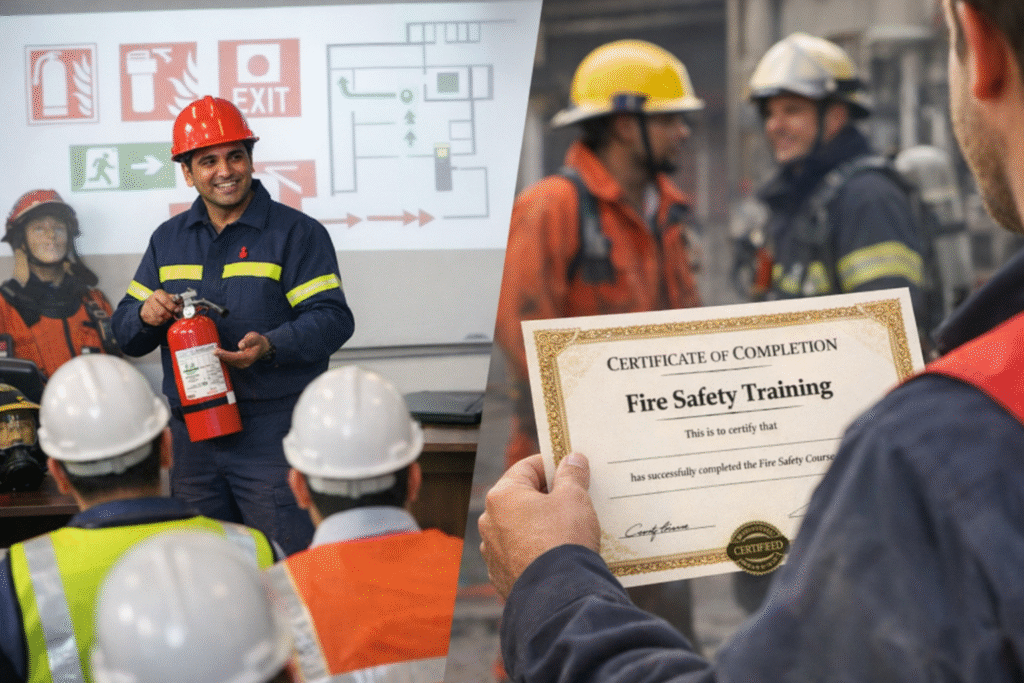
Fire safety training in modern industries is evolving toward a more structured and compliance-focused approach. Organizations are combining digital learning, practical drills, and proper documentation to improve workplace safety.
By investing in regular training programs and emergency preparedness planning, industries can significantly reduce fire risks and ensure safer working environments for employees.
Understanding different classes of fire and how they spread.
Hands-on training on various extinguishers such as:
● ABC
● CO₂
● Foam
● Emergency exit strategies ● Assembly point coordination ● Crowd management techniques
● Identifying hazards ● Implementing preventive measures ● Safety planning
This certification is suitable for:
● Students and job seekers
● Industrial workers
● Security personnel
● Facility managers
● Engineers and supervisors
The duration varies depending on the level:
● Basic Course: 1–3 days
● Intermediate Course: 1–2 weeks
● Advanced / Professional Course: 3–6 months
● Flexible and convenient
● Focused on theory
● Practical demonstrations
● Hands-on experience
● Choosing non-recognized certification
● Ignoring practical training
● Not updating skills regularly
● Selecting courses without industry relevance
A professional training institute offers:
● Recognized certification
● Practical, hands-on sessions
● Experienced trainers
● Industry-relevant curriculum
● Placement or career guidance support
Fire safety training certification is an essential investment in both safety and career development. It not only equips individuals with life-saving skills but also enhances employability and professional growth. In an era where safety standards are becoming increasingly strict, having certified fire safety knowledge gives individuals and organizations a significant advantage.
It helps individuals gain knowledge and skills to prevent and respond to fire emergencies
effectively.
While not always mandatory, many industries prefer or require certified candidates.
Basic courses may take 1–3 days, while advanced programs can take several weeks or months.
Online training is useful for theory, but practical training is highly recommended.
Yes, fire safety training is suitable for beginners as well as professionals.
Disclaimer:
This blog post is for informational purposes only and is not a substitute for professional fire safety advice. Always consult with experts for specific safety recommendations and guidance.
We hope you found this information helpful. Stay safe and be prepared!
Fire Door Safety: Importance, Types, Inspection & Maintenance Guide NFSI India September 11, 2026 Fire Door Safety: How Fire Doors...
Best Fire Safety Training in Vadodara & Gujarat | NFSI NFSI India September 10, 2026 Why NFSI Is One of...
Raksha Bandhan & Fire Safety | The True Meaning of Protection Beyond the Festival NFSI India August 26, 2026 Celebrate...