NFSI

Fire Safety Training for Hospitals | Healthcare Fire Safety Guide 2026

Introduction

Hospitals and healthcare facilities are among the most sensitive and high-risk environments when it comes to fire safety. Unlike other workplaces, hospitals house patients who may be immobile, critically ill, or dependent on life-support systems.

In such situations, even a minor fire incident can quickly escalate into a life-threatening emergency. Therefore, fire safety training in hospitals is not just a compliance requirement—it is a critical life-saving necessity.

A structured fire safety training program ensures that medical staff, administrative teams, and support personnel are prepared to respond effectively during emergencies while ensuring patient safety.

Why Fire Safety Training is Critical for Hospitals

Extreme heat directly impacts multiple fire-related factors:

1. Presence of Vulnerable Patients

Hospitals have patients who:

● Cannot walk or move independently
● Are under intensive care
● Require continuous monitoring

Evacuation in such cases requires trained personnel and proper planning.

2. High Fire Risk Environment

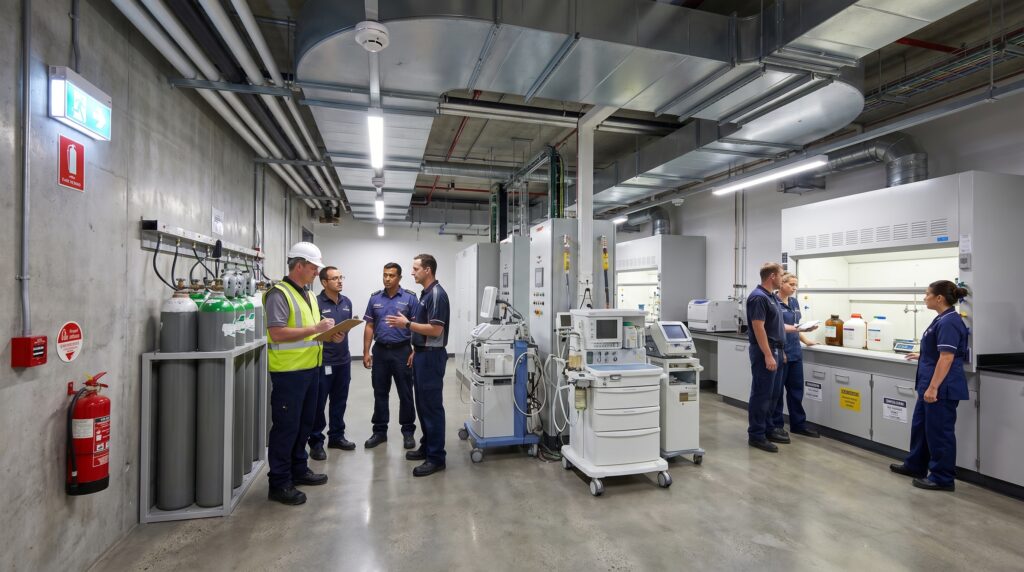
Healthcare facilities include several fire hazards:

● Oxygen cylinders and gas pipelines
● Electrical equipment and machines
● Laboratory chemicals
● HVAC systems running continuously

👉 These risks must be assessed through regular Fire Safety Audit Services.

3. Complex Building Layout

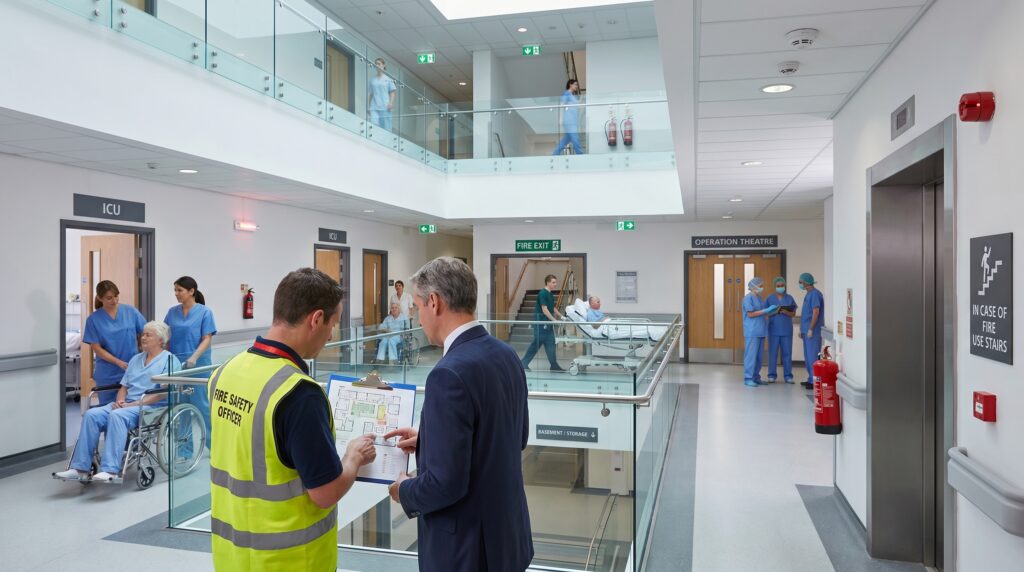
Hospitals often have:

● Multiple floors
● ICUs, operation theatres
● Emergency wards
● Basements and storage areas

Proper evacuation planning is essential to avoid confusion during emergencies.

👉 Use Emergency Evacuation Planning Services for structured response systems.

4. Legal & Compliance Requirements

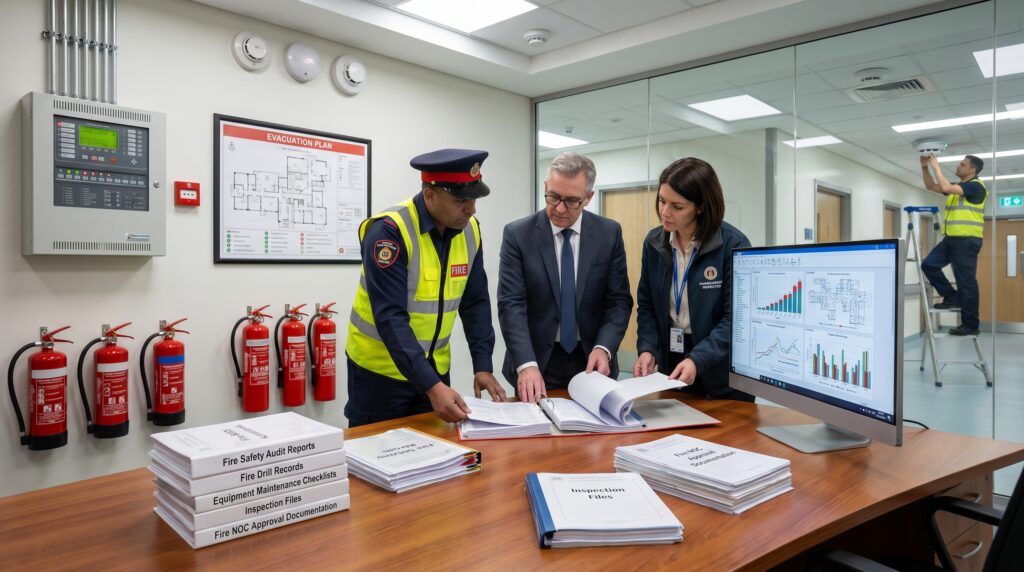
Hospitals must comply with fire safety regulations and maintain:

● Fire NOC
● Safety audit reports
● Fire drill records
● Equipment maintenance logs

👉 Get support through Fire NOC Assistance Services.

Common Fire Hazards in Hospitals

Understanding risks is the first step toward prevention:

● Electrical overload due to medical equipment
● Oxygen-rich environment increasing fire intensity
● Faulty wiring and outdated systems
● Improper storage of chemicals
● Overheating in server or generator rooms

👉 Conduct periodic checks with Electrical Fire Safety Audit Services.

What is Included in Hospital Fire Safety Training?

1. Fire Awareness Training

Staff are trained on:

● Types of fire and causes
● Hospital-specific fire risks
● Preventive measures

2. Fire Extinguisher Training

Hands-on training includes:

● Use of different extinguishers
● Safe handling techniques
● Immediate response actions

👉 Maintain equipment through Fire Extinguisher Refilling & Inspection Services.

3. Emergency Evacuation Training

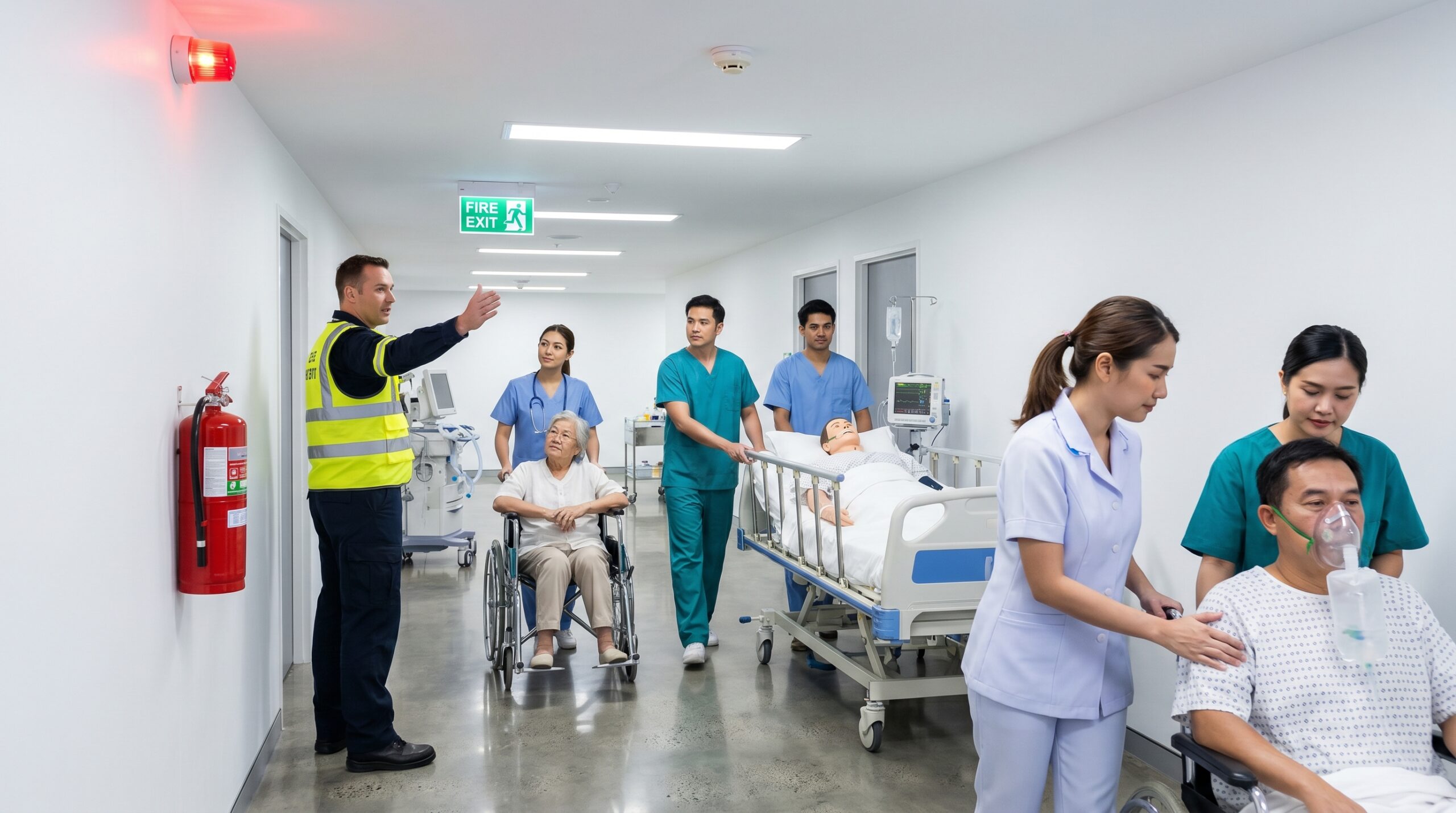
● Patient evacuation techniques
● Use of stretchers and wheelchairs
● Safe evacuation routes

👉 Plan effectively with Emergency Evacuation Planning Services.

4. Mock Fire Drill

● Real-time simulation
● Role assignment for staff
● Response time evaluation

👉 Conduct drills using Mock Fire Drill Training Services.

5. Emergency Response Team Setup

Hospitals must assign:

● Fire wardens
● Floor coordinators
● Emergency response teams

Key Fire Safety Measures for Hospitals

1. Maintain Fire Safety Equipment

● Fire extinguishers
● Fire alarms
● Sprinkler systems

2. Ensure Electrical Safety

● Regular inspection of wiring
● Avoid overloaded circuits
● Maintain electrical panels

3. Keep Emergency Exits Clear

● Clearly marked exits
● No obstruction in pathways
● Emergency lighting

4. Train Hospital Staff

● Doctors & Nurses
● Support staff
● Security personnel

👉 Organize sessions through Corporate Fire Safety Training Programs.

5. Maintain Documentation

● Fire audit reports
● Drill records
● Compliance certificates

👉 Ensure compliance with Fire Safety Compliance Services.

Challenges in Hospital Fire Safety

● Evacuating critical patients
● Managing panic among staff and visitors
● Maintaining continuous operations during emergencies
● Coordinating multiple departments

👉 These challenges can be minimized through Professional Fire Safety Training Services.

Benefits of Fire Safety Training in Healthcare

✔ Faster emergency response
✔ Reduced risk to patients
✔ Improved staff confidence
✔ Better compliance
✔ Enhanced safety culture

Conclusion

Fire safety training in hospitals is not optional—it is essential. The presence of vulnerable patients, complex infrastructure, and high-risk equipment makes preparedness critical. Hospitals that invest in proper training, regular audits, and emergency planning are better equipped to handle fire incidents and protect lives.

👉 Ensure your healthcare facility is prepared before an emergency occurs.

FAQs – Hospital Fire Safety

It helps staff respond effectively during emergencies and ensures patient safety.

At least twice a year or as per compliance requirements.

Electrical faults, oxygen systems, and equipment overheating.

All staff including doctors, nurses, support staff, and security personnel.

Yes, hospitals must follow strict fire safety regulations.

National Fire Safety Institute

We Offer Training For Fire Safety

Disclaimer:
This blog post is for informational purposes only and is not a substitute for professional fire safety advice. Always consult with experts for specific safety recommendations and guidance.

We hope you found this information helpful. Stay safe and be prepared!

Tags :
fire safety training for hospitals,healthcare fire safety training,hospital fire drill training,hospital fire safety compliance,medical facility fire safety
Share This :

Leave a Reply

Your email address will not be published. Required fields are marked *

Related Blogs