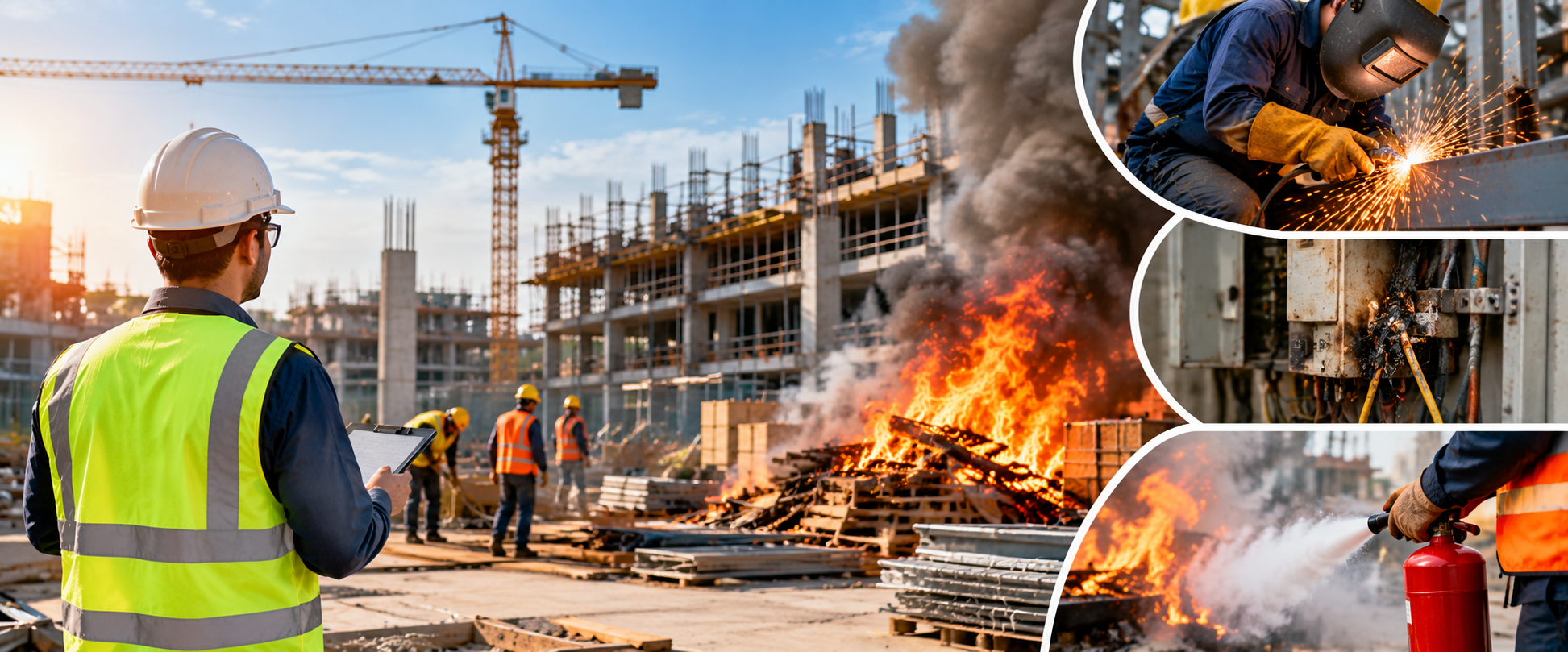
Fire Safety During Construction Work | Complete Safety Guide
Fire Safety During Construction Work | Complete Safety Guide NFSI India October 9, 2026 Fire Safety During Construction Work: Risks,...

Vadodara, Gujarat
NFSI India
June 18, 2026
Learn whether fire safety training is mandatory for companies in India. Understand legal requirements, employer responsibilities, compliance standards, and workplace fire safety best practices.
Every employer has a legal and moral responsibility to provide a safe working environment for employees, visitors, contractors, and customers.
One question frequently asked by business owners, HR managers, and facility managers is:
“Is fire safety training mandatory for companies in India?”
The short answer is:
In many workplaces, employers are required to take reasonable measures to ensure fire safety, and fire safety training is an important part of meeting those responsibilities. The exact legal requirements depend on the type of business, occupancy, industry, workforce, and the regulations applicable in the respective state.
This guide explains what employers need to know about fire safety training, legal responsibilities, and why investing in employee training is essential.
A fire emergency can escalate within minutes.
Without proper training, employees may:
● Panic during emergencies
● Use fire extinguishers incorrectly
● Block evacuation routes
● Delay emergency response
● Put lives at greater risk
A trained workforce responds more quickly, follows evacuation procedures, and helps reduce injuries and property damage.
India does not rely on a single law for workplace fire safety. Instead, different businesses may be governed by different regulations depending on their industry and location.
These may include:
● The National Building Code (NBC) of India
● State Fire Service Rules
● Occupational Safety, Health and Working Conditions (OSH) Code, 2020 (where applicable)
● Factories Act requirements (or corresponding provisions under current labour codes, where in force)
● Local municipal fire safety regulations
● Industry-specific compliance requirements
Employers should always check the regulations applicable to their state and industry
Fire safety training is strongly recommended—and often expected as part of compliance and risk management—for workplaces such as:
Factories dealing with machinery, electrical equipment, chemicals, or combustible materials.
High-rise office buildings, IT parks, and business centres.
Hospitals require trained staff due to the presence of patients, oxygen systems, laboratories, and critical equipment.
Hotels regularly conduct fire drills to prepare staff for guest emergencies.
Schools, colleges, coaching centres, and universities.
Storage facilities handling inventory, packaging materials, batteries, or chemicals.
Large public spaces require emergency preparedness and trained personnel.
Employers should ensure that employees know how to respond during a fire emergency.
A good workplace fire safety program typically includes:
● Fire safety awareness
● Fire prevention measures
● Fire extinguisher training
● Emergency evacuation procedures
● Mock fire drills
● Fire emergency reporting
● Safe assembly point procedures
These measures contribute to a safer workplace and support compliance efforts.
A professional fire safety training program generally covers:
● Common causes of workplace fires
● Fire prevention techniques
● Hazard identification
Employees learn:
● Different extinguisher types
● When each extinguisher should be used
● Safe operating techniques
● PASS Method
A practical fire drill allows employees to:
● Respond to alarms
● Follow evacuation routes
● Assemble safely
● Understand emergency roles
Training includes:
● Exit route identification
● Emergency communication
● Assisting visitors
● Safe evacuation procedures
Employees become familiar with:
● Fire extinguishers
● Hose reels
● Fire hydrants
● Fire alarm systems
● Smoke detectors
● Sprinkler systems
Investing in fire safety training provides significant benefits.
Protects Employees
Prepared employees respond calmly and safely.
Reduces Fire Risk
Awareness helps prevent common workplace hazards.
Improves Emergency Response
Employees know exactly what to do during emergencies.
Supports Compliance
Training demonstrates commitment to workplace safety and helps support applicable compliance requirements.
Protects Business Operations
Prepared organizations recover faster from emergencies.
Although requirements may vary depending on the organization and applicable regulations, many businesses adopt good practices such as:
● Fire awareness sessions for new employees
● Refresher training at regular intervals
● Periodic mock fire drills
● Annual fire safety audits
● Equipment inspection and maintenance
Organizations should follow applicable legal requirements and industry best practices.
Many organizations invest in fire equipment but neglect employee training.
Common mistakes include:
● Employees never using a fire extinguisher
● Expired extinguishers
● Blocked emergency exits
● No mock fire drills
● Poor emergency planning
● No documentation
These gaps can significantly increase risk during emergencies.
Professional trainers provide structured learning with practical demonstrations and real-life emergency simulations.
Employees gain confidence through:
● Live fire extinguisher practice
● Mock emergency situations
● Evacuation exercises
● Workplace hazard awareness
Practical experience is often far more effective than theory alone.
Choosing an experienced training partner helps organizations build a stronger safety culture.
At NFSI (National Fire Safety Institute), our training programs focus on practical learning, compliance awareness, and real-world emergency preparedness.
Our corporate training programs include:
✔ Fire Safety Awareness Sessions
✔ Live Fire Extinguisher Demonstrations
✔ Mock Fire Drills
✔ Emergency Evacuation Training
✔ Workplace Hazard Identification
✔ Fire Safety Audit Support
✔ Customized Industry-Specific Training
With decades of experience in fire and safety education, NFSI helps organizations improve employee preparedness while promoting a safer workplace.
Fire safety training should not be viewed simply as a compliance activity—it is an investment in people, business continuity, and organizational resilience.
Whether your company is a manufacturing unit, office, hospital, educational institution, warehouse, or commercial facility, well-trained employees can make a critical difference during emergencies.
Building a culture of preparedness today can help prevent serious incidents tomorrow.
If you’re looking to strengthen your workplace fire safety program, professional training combined with regular fire drills and safety audits is the best approach.
Requirements vary depending on the industry, workplace, occupancy, and applicable state and national regulations. Many organizations are expected to implement appropriate fire safety measures, including employee training.
Employees, supervisors, security personnel, housekeeping staff, facility teams, and emergency response teams should receive appropriate training.
Organizations should follow applicable regulations and internal safety policies. Many businesses conduct periodic drills as part of their emergency preparedness program.
Practical sessions help employees confidently use fire extinguishers, follow evacuation procedures, and respond appropriately during emergencies.
Yes. Fire emergencies can occur in businesses of any size. Training helps improve preparedness and reduce risk.
Disclaimer:
This blog post is for informational purposes only and is not a substitute for professional fire safety advice. Always consult with experts for specific safety recommendations and guidance.
We hope you found this information helpful. Stay safe and be prepared!
Fire Safety During Construction Work | Complete Safety Guide NFSI India October 9, 2026 Fire Safety During Construction Work: Risks,...
Fire Safety for Shops & Small Businesses | Complete Guide NFSI India September 28, 2026 Fire Safety for Shops &...
Solar Panel Fire Safety: Risks, Prevention & What Every Building Owner Should Know NFSI India October 6, 2026 Solar Panel...